

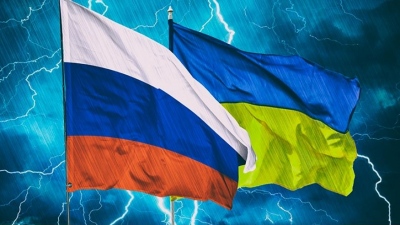
In a move revealing that Brussels is now openly seeking a channel of communication with Moscow, EU Foreign Ministers are expected to meet in Cyprus next week to consider who could take on the role of the primary negotiator with Russia. According to the Financial Times, the names of former Italian Prime Minister and former European Central Bank chief Mario Draghi and former German Chancellor Angela Merkel are already on the table, in a discussion that could signal a significant shift in Europe's strategy regarding Vladimir Putin and the war in Ukraine.
The Cyprus meeting
EU Foreign Ministers will meet in Cyprus to discuss the merits of potential candidates for the role of negotiator with Russia. Among the candidates being discussed are former Italian Prime Minister Draghi and former German Chancellor Merkel. EU Foreign Ministers will discuss potential negotiators with Russia at a meeting in Cyprus next week, the Financial Times reports, citing sources. According to the report, former Italian Prime Minister Draghi and former German Chancellor Merkel are being considered as potential candidates.
"Foreign ministers will discuss the merits of potential candidates at an EU meeting in Cyprus next week," the Financial Times reports. Sources for the report claim that the US administration under President Trump has reportedly informed Europeans that it has no objection to EU negotiations with Moscow in parallel with the US-Russian dialogue. An anonymous senior Ukrainian official told the newspaper that Zelensky would like to see "someone like Draghi" or "a powerful incumbent leader" in this role.
According to the newspaper, the leader of the Kyiv regime is expected to discuss this matter with the leaders of France, Germany, and Britain later this week. According to sources, EU Foreign Ministers will also discuss Europe's "requirements" for post-war relations with Russia, red lines in resolving the Ukrainian conflict, and the conditions for initiating any discussions with Russia. Russian President Putin, on May 9, regarding a potential interlocutor for Moscow-Brussels negotiations, expressed the view that he would personally prefer former German Chancellor Gerhard Schroeder. Putin emphasized, however, that the EU itself should appoint this individual.
Merkel's criticism
The FT report, however, comes one day after clear jabs at the European Union for its lack of a substantive diplomatic initiative toward Russia left by former German Chancellor Angela Merkel, emphasizing that Europe is not leveraging its political weight to end the war in Ukraine. Speaking to the public broadcaster WDR, Merkel stressed that while military support for Ukraine is necessary and correct, it is not sufficient on its own.
"I believe that the military aid we have offered so far is absolutely correct. It is also right to strengthen our deterrent power. What saddens me is that Europe is not sufficiently utilizing its diplomatic capabilities," she stated. At the same time, she also left jabs at the role of the United States, noting that "it is not enough for Donald Trump to maintain contacts with Russia," implying the need for more active European participation in developments.
Pressure for a special envoy – Reservations from Berlin
The issue of appointing a special envoy for peace talks between Russia and Ukraine is returning dynamically to the forefront, with Moscow and Kyiv appearing open to such a prospect. At the same time, Donald Trump's negotiation team has its focus primarily on the conflict in the Middle East. Chancellor Friedrich Merz, also a member of the Christian Democrats like Merkel, appeared reserved.
As he stated, the appointment of a single negotiator representing the EU as a whole "is not currently in the plans," although related discussions continue both at the European level and in a narrower format with France and the United Kingdom. He also warned against excessive expectations: "Primarily, we hope to strengthen Moscow's willingness to come to the negotiating table. Until that happens, there is no reason to make decisions on representation."
The lost opportunity of 2021
Angela Merkel revealed that she had proposed the creation of an institutionalized dialogue between the EU and Russia as early as October 2021, at her last European Council Summit, a few months before the start of the war. However, the proposal did not move forward due to disagreements within the Union regarding the stance toward Moscow. "You must keep working until a common position is found," she noted, adding that "diplomacy was always the other side of the coin, even during the Cold War."
The burden of legacy and the mediator's role
In recent years, Merkel's political legacy has received intense criticism, mainly due to Germany's increased energy dependence on Russia during her tenure. However, her experience in negotiations with Vladimir Putin and Volodymyr Zelensky has led some to consider her a potential candidate for the role of a European mediator.
She, however, clarified that she has not received any official proposal and appeared negative toward the possibility. She stressed that only those who hold real political power can negotiate effectively. "We could negotiate with Putin because we had political power, because we were heads of governments. This power is essential," she stated, adding that leaders must take responsibility for negotiations themselves.
The shadow of the Minsk agreements
The discussion inevitably brings to the forefront the Minsk agreements, which Merkel negotiated along with the French leadership in 2014 and 2015, with the aim of ending the conflicts in eastern Ukraine. These agreements failed to secure a permanent ceasefire, as violations continued for years, until Russia's full-scale invasion in 2022—a fact that continues to weigh on European choices to this day.
www.bankingnews.gr

Σχόλια αναγνωστών